
Aiken County Arrest Records and Court Charges
Aiken County arrest records can begin with law-enforcement or detention records. The Aiken County Detention Center Detainee Public Search covers current detainees only and can show arrest details, charge, case number, disposition field, bond, arrest agency, physical descriptors, and booking images. Sheriff's incident reports and background checks are separate public-safety records, not court case files.
Court charges after arrest begin when the charge is filed or routed to a court. For a county summary matter, the charging document, ticket, or warrant should identify the Magistrate Court, Central Traffic Court, or other summary court. For a General Sessions matter, the Second Judicial Circuit Solicitor prosecutes the case and the Aiken County Clerk of Court keeps the court file. The full case file and final sentence belong in Aiken County criminal court records, while current custody details belong in the jail search path.
The manifest assigns the Sheriff's Records page as a source for arrest-record access: Aiken County Sheriff's Office Records gives the records window channel for incident reports, background checks, and other sheriff-held records.
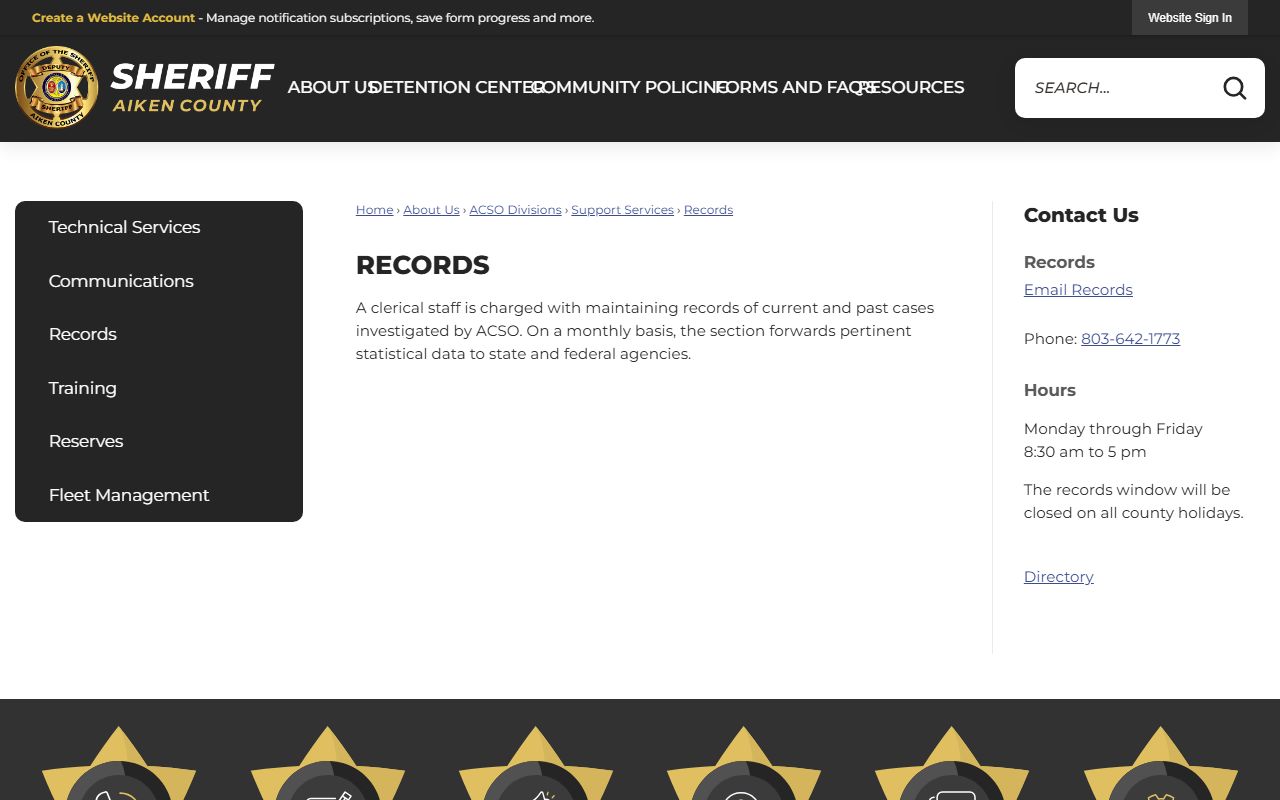
Sheriff records can explain the arrest side, but court charge status must still be checked with the court or prosecutor path.
Find Aiken County Arrest Records
Use more than one official access channel. Start with the current detainee search if the person may still be in the Aiken County Detention Center. Use Sheriff's Records for incident reports, county-only background checks, and public-safety records. Use the Public Index, court rosters, Magistrate Court, Municipal Court, or Clerk of Court for the charges that move into court.
- Check the Aiken County Detention Center Detainee Public Search for current-custody booking and charge detail.
- Use the charging document, ticket, warrant, or bond paperwork to identify the issuing court or agency.
- Search the Aiken Public Index or court rosters for filed court charge records and scheduled events.
- Contact the assigned Magistrate, Municipal Court, Traffic Court, General Sessions division, or Clerk when the online record does not show the charge.
- Use Sheriff's Records for incident reports and Aiken County background checks, knowing those checks cover Aiken County incidents only.
The Sheriff's Office division directory is assigned as a manifest source: Aiken County Sheriff's Office division directory lists direct records, civil process, communications, public information, and administrative contact channels.
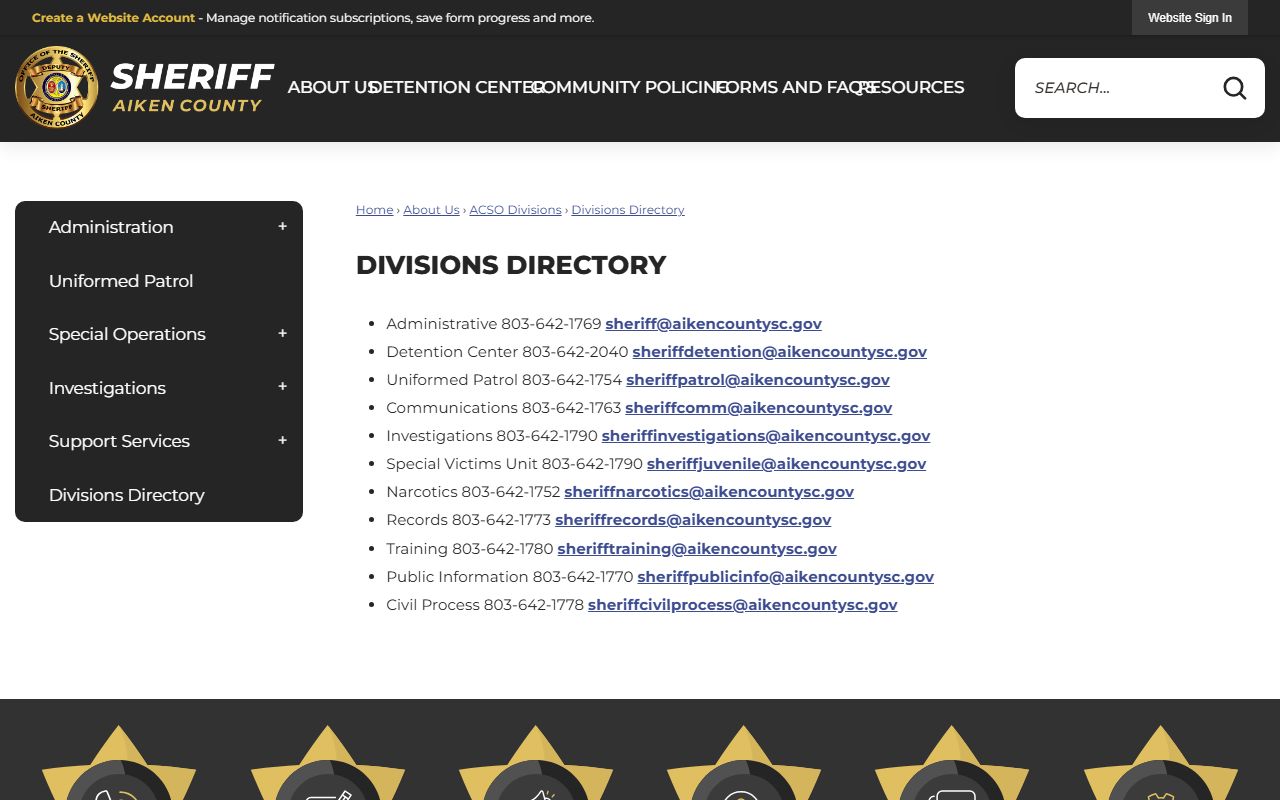
Those division contacts are useful when the arrest record, civil process record, public information request, or court charge question belongs to different offices.
Aiken County Charging Documents
A charging document is the paper or filing that states the offense the government is pursuing. South Carolina research for Aiken County confirms warrant numbers, indictments, first appearance materials, traffic tickets, and General Sessions records as charge-path records. In practice, the exact form depends on the court level and the agency. A Magistrate or Municipal matter may begin through a ticket, warrant, or complaint. A General Sessions case may include an indictment or other formal prosecutor filing.
| Document Type | Who Usually Starts It | Aiken County Use | What to Check |
|---|---|---|---|
| Complaint / Ticket / Warrant | Law enforcement, magistrate, or municipal process | Summary criminal, traffic, bond, warrant, and lower-level matters | Issuing court, warrant number, charge, court date, and bond instructions. |
| Information or Prosecutor Filing | Solicitor or prosecutor | Cases screened or prosecuted by the Second Judicial Circuit Solicitor | Filed charge, amended charge, plea terms, and dismissal or diversion status. |
| Indictment | Grand jury process | General Sessions criminal cases in Circuit Court | Offense charged, defendant, case number, and docket or roster events. |
The Sheriff's FAQ distinguishes sheriff records from court routing: Aiken County Sheriff's Office FAQ says incident reports and county background checks are available through the records lobby with photo ID and the listed fee rules.
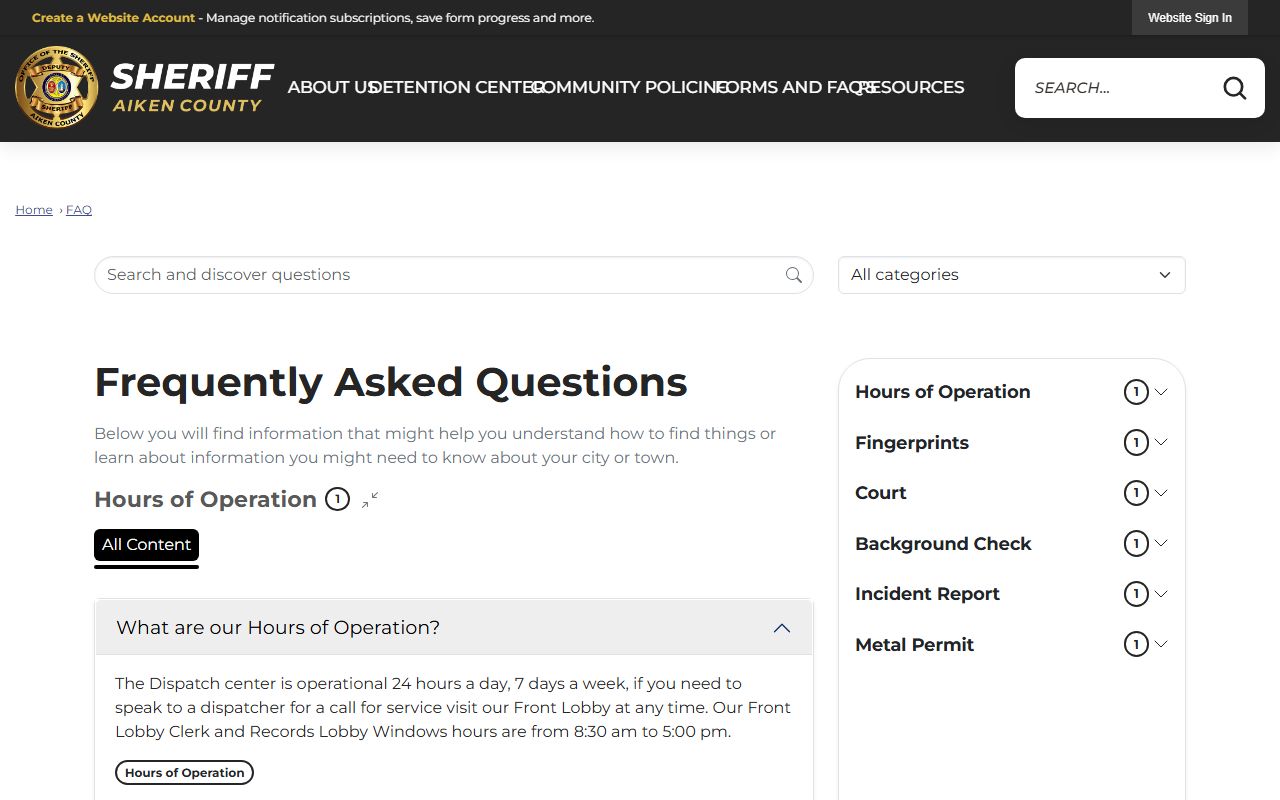
The FAQ also supports the key distinction: an incident report or background check is not the same as a court charge record or final criminal disposition.
Aiken County Charge Status
Charge status changes as a case moves. A person can be arrested, booked, released on bond, scheduled for court, indicted, placed on a roster, screened for diversion, plead guilty or not guilty, have a charge dismissed, or have a case resolved by sentence. The Aiken detainee search may show a disposition field for custody records, but the official court status should be checked in the court record.
| Status | What It Means | Where to Verify |
|---|---|---|
| Pending | The charge is still open or moving through court. | Public Index, court roster, Clerk, Magistrate Court, Municipal Court, or Solicitor. |
| Amended / Reduced | The charge has changed from the original filing. | Case docket, Solicitor filings, plea paperwork, or court order. |
| Dismissed | The charge did not continue to conviction or was ended by the court or prosecutor. | Disposition entry, court order, or expungement review path. |
| Nolle Prosequi | The prosecutor is not pursuing the charge at that stage. | General Sessions record, Solicitor action, or Clerk record. |
| Convicted / Sentenced | A guilty plea or finding led to sentence terms. | Criminal court record, sentence order, or certified Clerk copy. |
| Expungement Eligible | A dismissal or diversion outcome may qualify under South Carolina rules. | Solicitor expungement process or disposing court for qualifying Magistrate/Municipal matters. |
Aiken County Arrest to Bond Court
A person arrested in Aiken County may appear in the jail lookup before a complete Public Index record appears. Bond Court is tied to the Aiken County Detention Center at 435 Wire Road. The research states Bond Court hearings are Monday-Friday at 10:00 a.m. and 3:00 p.m., and weekends or holidays at 10:00 a.m. and 1:30 p.m. Bond Court phone is 803-642-2044.
Bond Court sets bond after arrest and sends paperwork to the proper court. If the charge is a county summary or magistrate matter, the ticket, warrant, or charging document should identify the correct Magistrate or Central Traffic Court. If the charge is General Sessions level, the Solicitor prosecutes and the Clerk's General Sessions division handles the court file, rosters, and court forms.
Note: Jail booking data is current-custody information and is not proof that the person was convicted of the listed charge.
Charges vs Convictions
Aiken County arrest records and court charge records can show accusations. They do not automatically show guilt. The sheriff detainee search disclaimer states that information is informational, subject to change, can contain errors, changes quickly, and arrest does not mean conviction. The court record must be read through disposition and sentence before drawing conclusions.
| Point | Charge | Conviction |
|---|---|---|
| Meaning | An accusation after arrest, warrant, ticket, indictment, or prosecutor filing. | A finding or plea of guilt entered by the court. |
| Timing | Can appear at arrest, booking, first appearance, or filing. | Appears only after plea, verdict, or final adjudication. |
| Can Change | May be amended, reduced, dismissed, or not pursued. | Can lead to sentence, probation, fines, restitution, or custody. |
| Best Source | Detainee search, charging document, Public Index, court roster, or prosecutor record. | Disposition, sentencing order, Clerk certified copy, or final court record. |
Aiken County Charge Codes
South Carolina criminal records may use CDR Codes. The research describes CDR Codes as four-digit administrative codes representing criminal offenses. They are useful for indexing and charge identification, but they do not replace the South Carolina Code or common law offense. One arrest can produce more than one charge, more than one case number, or a mix of magistrate, municipal, traffic, and General Sessions activity.
Severity and venue matter. Magistrate Courts generally handle offenses subject to penalties not exceeding a $500 fine or 30 days imprisonment, unless another law allows more. Municipal Courts handle municipal offenses punishable by up to a $500 fine or 30 days imprisonment and do not have civil jurisdiction. General Sessions handles higher-level criminal cases prosecuted by the Solicitor.
Sealed vs Expunged Charges
Some Aiken County charge records are restricted. Juvenile charges and juvenile court information are confidential under South Carolina juvenile statutes. Sealed records are hidden from routine public inspection. Expunged records follow a process that removes eligible criminal records. The Aiken Solicitor expungement application notes that the office does not issue background checks, and that dismissed Magistrate or Municipal charges after June 2, 2010 must be expunged through the court that disposed of the charge.
| Point | Sealed Charge Record | Expunged Charge Record |
|---|---|---|
| Public Search | May not appear in ordinary Public Index or roster views. | Should not remain available as a public criminal record after completion. |
| Legal Basis | Confidentiality statute, court rule, or court order. | South Carolina Uniform Expungement provisions and court or Solicitor process. |
| Aiken Path | Verify with the court that controls the case. | Use the Solicitor for eligible matters, or the disposing Magistrate/Municipal court for qualifying dismissed charges after the stated date. |
| Important Limit | Confidential does not mean nonexistent. | Traffic offense violations are not expungeable under the captured application note. |
The South Carolina expungement statute is the official source for charge-record cleanup rules: S.C. Code Chapter 22 expungement provisions provides the statutory background for eligible criminal-record expungement.
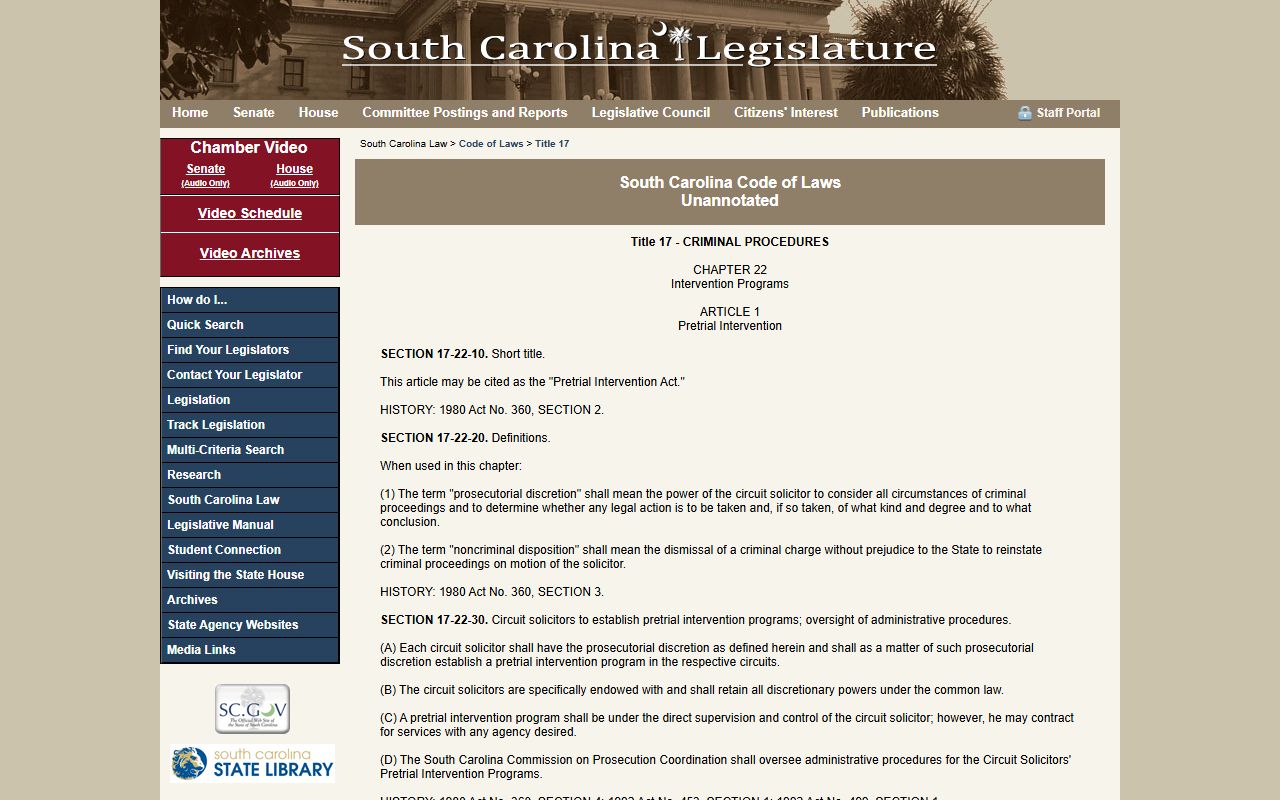
Expungement rules affect charge lookup because a dismissed or diversion-related charge may no longer be a public record after the process is complete.
Public Access to Aiken Charges
Public access depends on the record holder. Sheriff records include incident reports, background checks, and current detainee data. Sheriff's Records Division is 803-642-1773, and the records window is Monday-Friday, 8:30 a.m.-5:00 p.m., closed county holidays. The Sheriff's FAQ says Aiken County background checks require photo ID, cost $10 by exact cash or money order, and cover Aiken County incidents only. Victims requesting incident reports are not charged according to the FAQ notes.
Court charge records use court channels. The Clerk of Court handles General Sessions court files and rosters, Magistrate Courts handle warrants, bond, preliminary hearings, traffic, misdemeanor, and civil matters up to $7,500, and Municipal Courts handle city ordinance, municipal traffic, and city criminal matters. The Second Judicial Circuit Solicitor prosecutes criminal matters in Circuit Court, Family Court juvenile scope, and some Magistrate Court cases. For countywide active warrants, the research found no official Aiken County Sheriff's Office countywide active-warrant portal, though North Augusta has a municipal warrant app.